
Search Columbia Police Records
Columbia Police Records can lead you to city incident reports, arrest reports, crash reports, and the right office for a copy request. Some searches stay with the Columbia Police Department records staff. Others move to Maury County once a case reaches booking, jail custody, or court. That split matters. A city report is not the same as a county jail record or a statewide criminal history file. This page keeps the Columbia path clear so you can search, request, and compare police records without sending the request to the wrong office first.
Columbia Police Records Search
The city research points first to the Columbia Police Department and its records staff. The department headquarters is listed at 707 N Main Street, Columbia, TN 38401, with dispatch reached through the main number at 931-388-2727. That city office is the right starting point when you need an offense report, incident report, arrest report, or another file that was created by Columbia officers. It is also the place to start when you are trying to sort out whether a report is still open or available for release.
The Columbia records side handles original copies of offense and incident reports, field reports, crash reports, and arrest reports. That matters because the records division is more than a front desk. The research describes it as the central repository and distribution center for report intake, review, control, retrieval, and maintenance. If the city created the file, Columbia Police Records should usually begin there.
See the main city police page before you make a request.
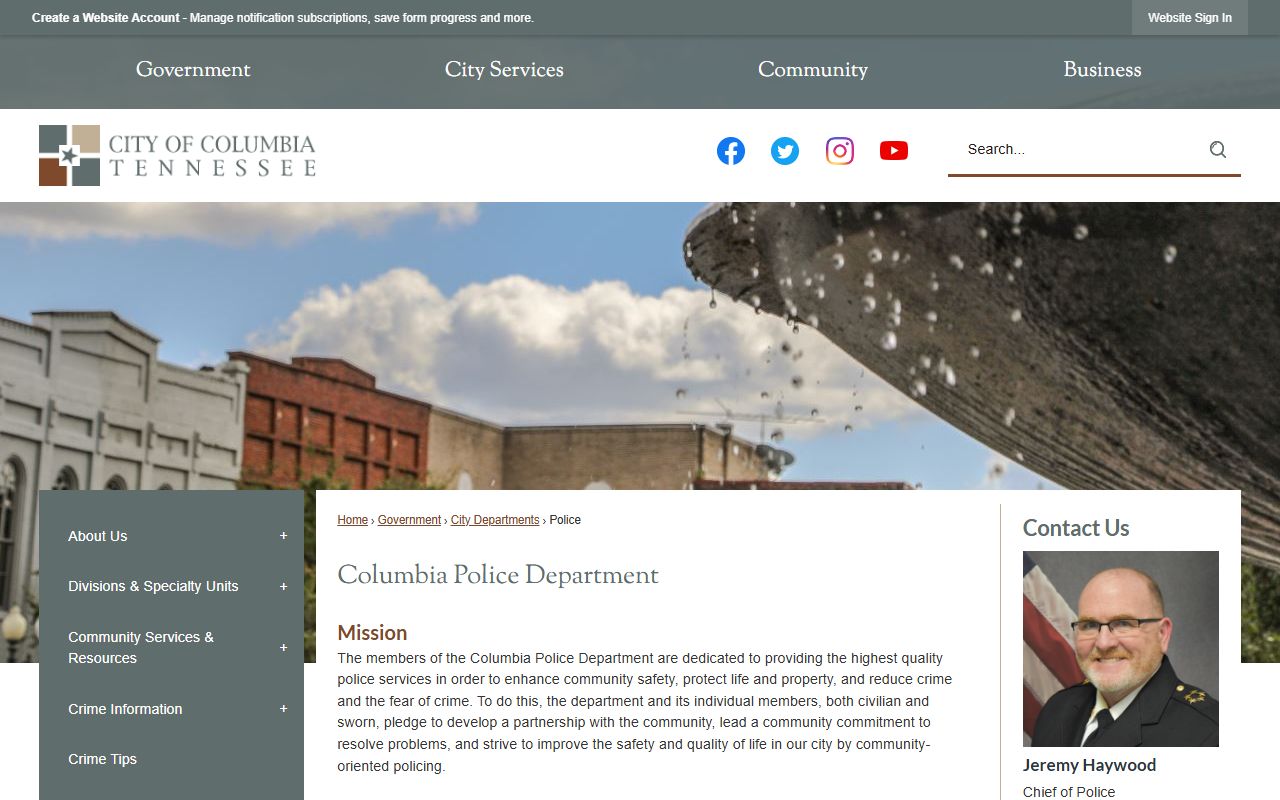
The city police page is the clearest first stop when Columbia Police Records involve a local report rather than a county booking file.
Where to Find Columbia Police Records
Columbia Police Records do not stay in one lane for every case. The city keeps the police report. Maury County may hold the jail and custody side after an arrest. State systems can help if the search expands into crash files, court tracking, or statewide criminal history. If you keep those layers separate, the search gets easier. If you blur them together, you risk sending a city report request to the county or asking the state for a file it does not own.
The city records office is supported by the Records Division page, which is the main city page for request and retrieval steps. The research says requests for records shall go through the Records Division and that release follows department policy and Tennessee open-records law. It also says active investigations cannot be released until the investigation is complete. That is an important local limit and should shape how a request is worded.
Use the records division page when your Columbia Police Records request needs city-level handling, fee details, or clarification on whether a report is still under investigation.
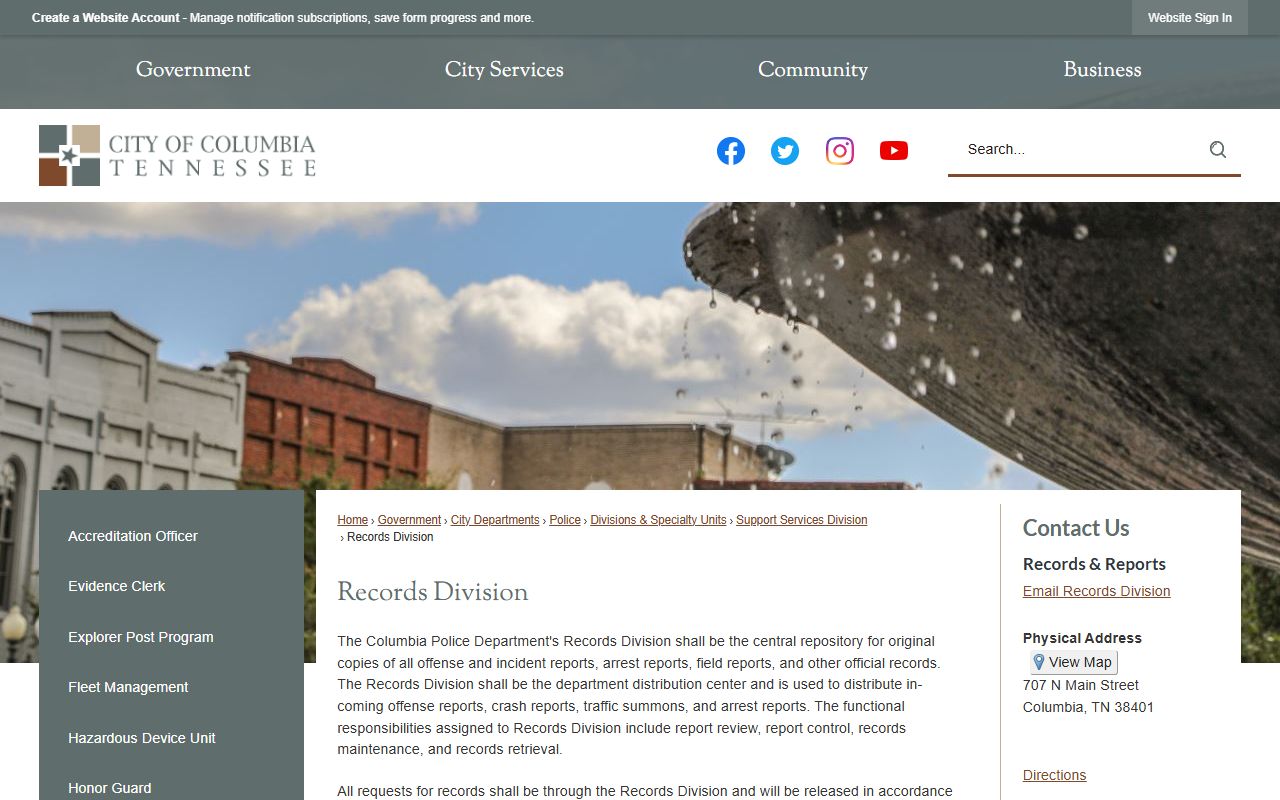
The records division page supports the practical side of a Columbia Police Records request by pointing to the staff and rules tied to city-held reports.
Columbia Police Department Records
City records can include offense reports, incident reports, arrest reports, field reports, crash reports, and other files maintained by the department. The research describes the Records Division as the department center for in-coming offense reports, crash reports, traffic summons, and arrest reports. That makes Columbia Police Records broader than just one kind of case file. It also means the records staff may be the right source even when the event type changes from one case to the next.
The local rules matter. The research says police reports that are still under investigation cannot be released until the investigation is complete. That does not mean all Columbia Police Records are closed. It means release can depend on case status. If a request is too broad or asks for an open file, it may draw a delay or denial for the restricted part. Narrow requests help. Ask for a specific report, date, location, or case number if you have one.
See the city department page for the broader Columbia police structure around patrol, records, and report handling.
The broader city page helps place Columbia Police Records inside the department structure, which is useful when you are trying to match a report type to the right city office.
How to Request Columbia Police Records
The research says all requests for records should go through the Records Division. That gives Columbia one clear city-side route. Small reports under ten pages may be free if you call, fax, or email. Larger reports may carry a charge and need to be picked up at the Records Division. That local rule is more specific than the state default and is exactly the kind of detail that keeps a page useful rather than generic.
A good Columbia Police Records request usually includes:
- Name of the person involved
- Date of incident or arrest
- Location of the event
- Report or case number if known
- Specific type of record requested
The city says records are released in line with Tennessee open-records law and department policy. That means you should expect normal redactions where required by law. It also means an active file may wait until the investigation closes. Columbia Police Records are easier to obtain when the request is concrete and tied to one file rather than a broad search across months of department activity.
Columbia Police Records and Maury County
Columbia is in Maury County, so the county side matters after a city arrest reaches booking or jail custody. The research lists the Maury County Sheriff's Office and Maury County Jail at 1300 Lawson White Drive, Columbia, TN 38401. The county records coordinator is Missy Wray, and the county allows in-person, mail, email, or fax requests with Tennessee residency required. That gives a separate route for custody-side records that do not belong to the city department.
The county research is jail-focused. It notes booking information, charges, bond amount, court date, and inmate mail rules. That does not replace Columbia Police Records. It fills the next part of the timeline when a city case turns into a county booking matter. Use the city for the police report. Use Maury County for jail and custody follow-up.
See the county office when the case moved out of a city report and into jail or county-side records.

The county image helps connect Columbia Police Records to the jail and custody side of a case once the event leaves the city-only record path.
Public Access to Columbia Police Records
Columbia Police Records are governed by Tennessee public-access law. The basic rule is in T.C.A. 10-7-503, which opens records to Tennessee citizens unless another law blocks release. That broad rule does not wipe out restrictions. Active investigations, juvenile material, private identifying data, and other protected information can still be withheld or redacted.
The department research already points to this local effect. If a police report is still under investigation, Columbia will not release it until the investigation is complete. That is a local application of the broader state rule. The safest way to handle Columbia Police Records is to ask first for the public portion, then narrow the request if staff tells you some material is not ready for release yet.
Read the statute before making a broad city request.
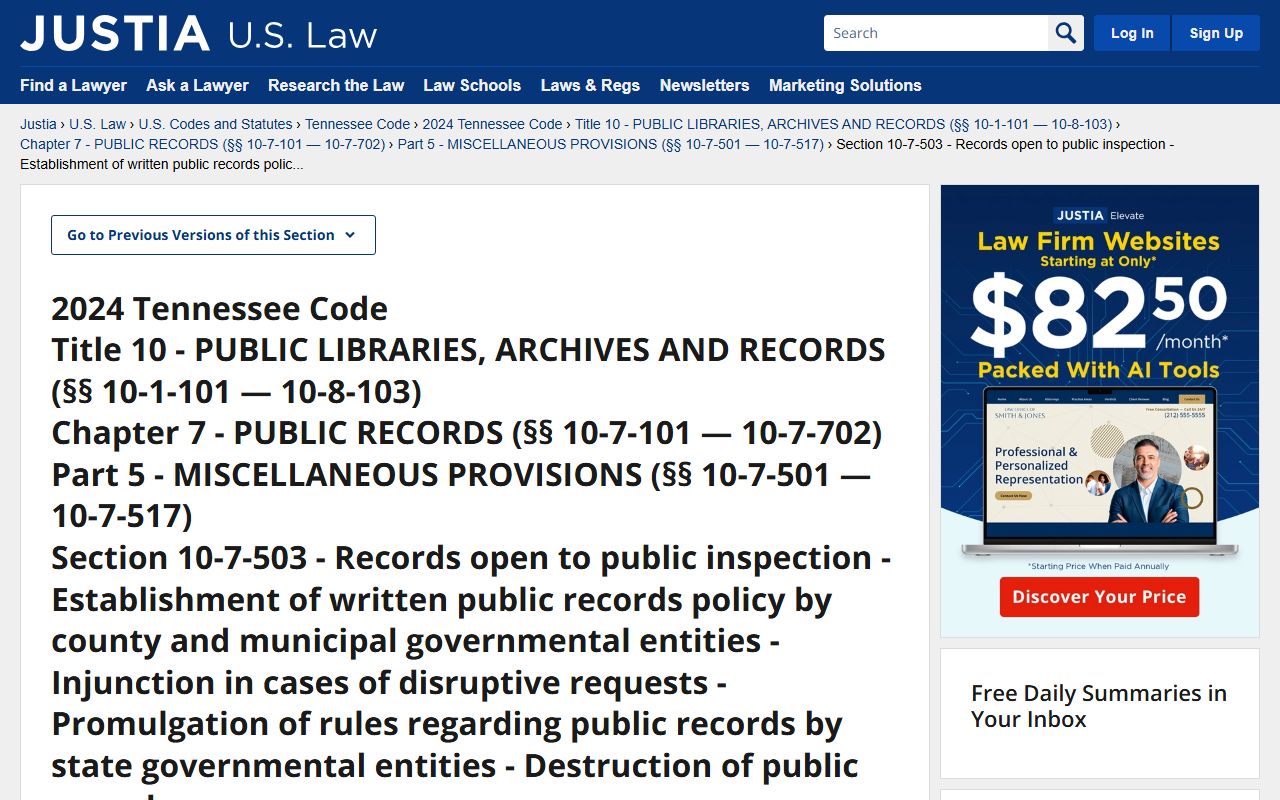
The statute image supports the local Columbia Police Records process by showing the state law behind response timing, inspection rights, and lawful redaction.
Columbia Police Records and State Tools
State tools matter when the city and county pages are not enough. The Tennessee Bureau of Investigation runs the statewide criminal-history system and the TORIS portal. The Department of Correction runs FOIL for felony offender searches. The state crash portal at purchasetncrash.gov is the better choice when the event was a traffic crash rather than a city incident report request.
These tools do not replace Columbia Police Records. They support them. Use the city file for the local report, the county file for booking and detention, and the state tools for broader criminal-history or crash-record needs.
Use the TBI site when your Columbia Police Records search needs statewide history context.
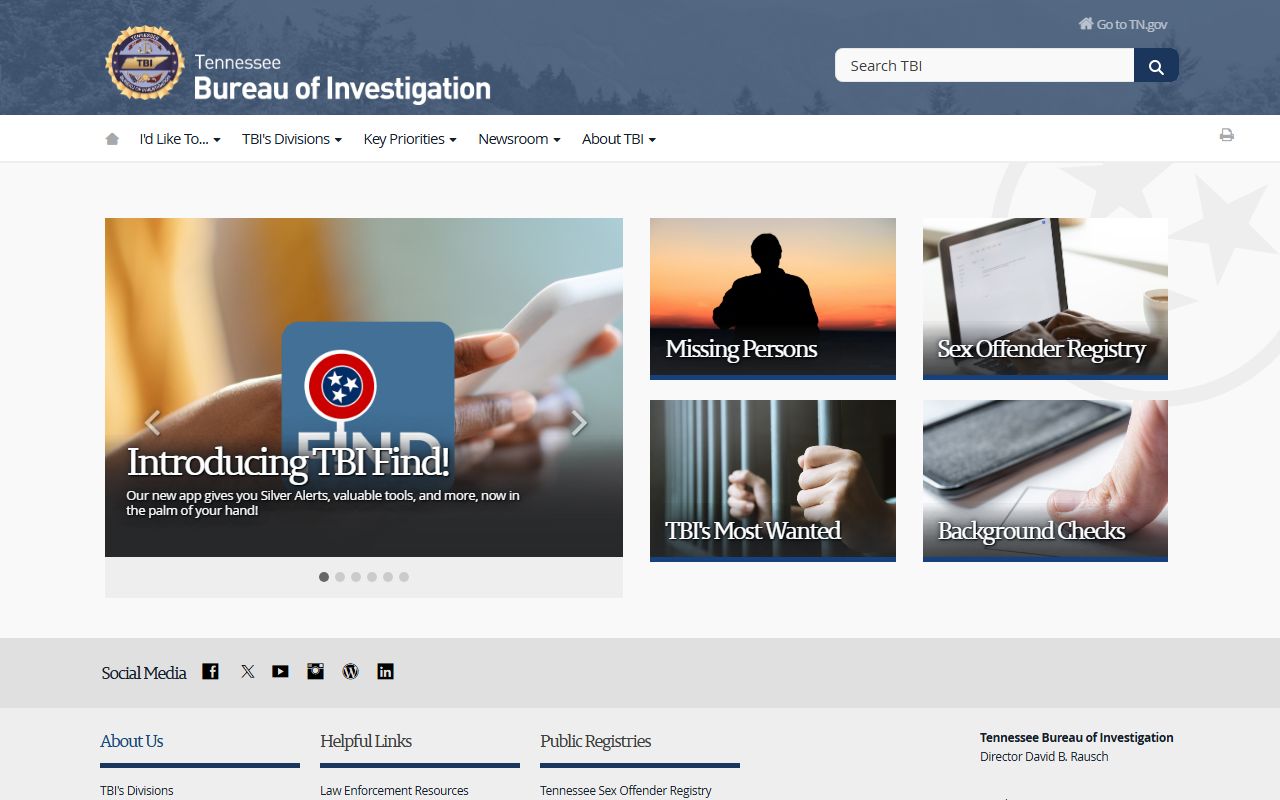
The TBI site is a useful support tool when a Columbia Police Records search needs to move beyond one city report.
Columbia Police Records and Court Follow-Up
After the city report and county booking, the next step can be the court file. The Tennessee Courts website helps track the case side after an arrest or citation. That part matters when you want to see what happened after the initial city event. Police records explain the event. Courts explain what happened next.
That split is practical. It keeps you from asking the police department for a document the clerk keeps instead. It also helps when the city report is brief but the court file carries the later hearing and case status details.
Use the court site for the next step after report and booking.
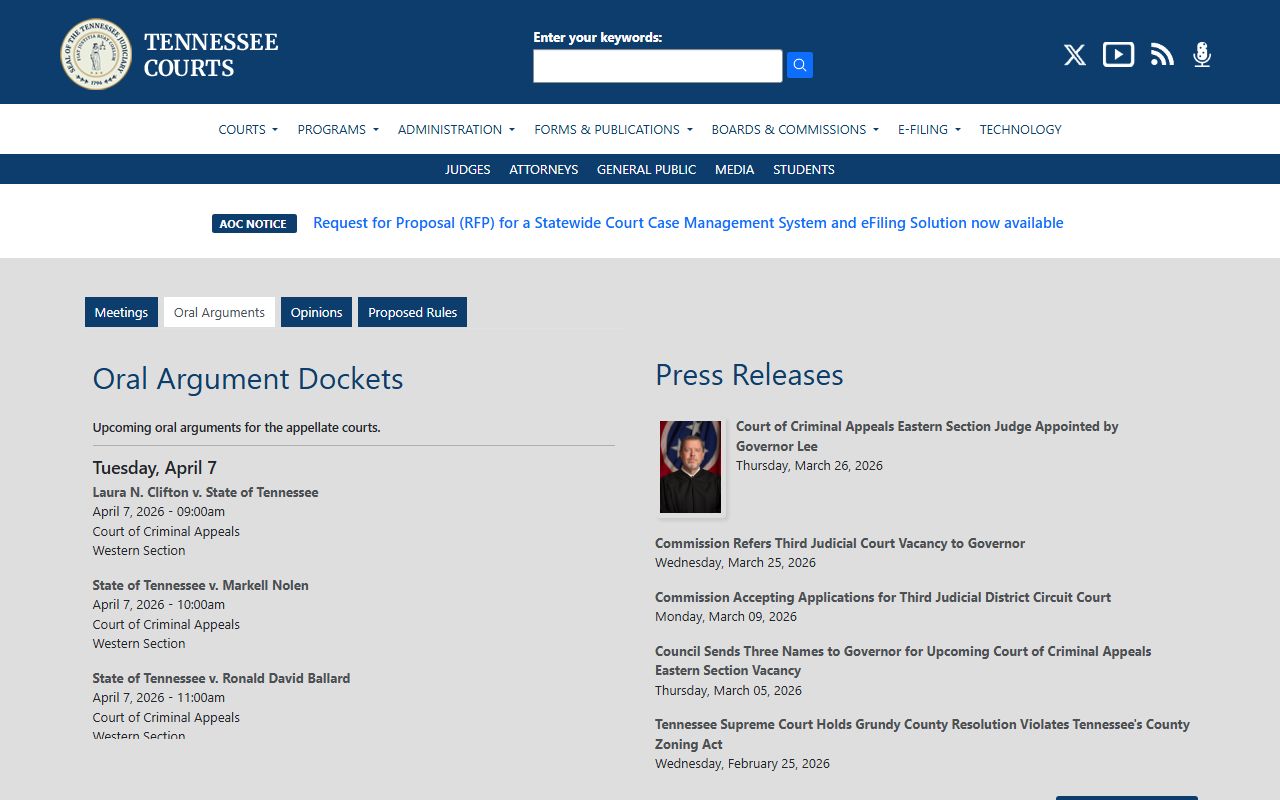
The courts site helps connect Columbia Police Records to dockets, hearing dates, and other case follow-up that the city report does not usually provide.
Columbia Police Records Fees
Columbia has a useful local fee detail in the research. Crash or incident reports under ten pages may be free by phone, fax, or email. Larger reports can carry a charge and must be picked up at the Records Division. On the county side, Maury County can apply standard copy and research costs under Tennessee public-records rules. That means Columbia Police Records requests should be sized carefully. Small, specific requests are easier to fill and often cheaper.
If the request grows beyond one city report, ask the city or county office to explain the fee before the copy is prepared. That avoids surprise costs and helps you decide whether you need the full file or only one document from it.
More Columbia Records
Columbia Police Records usually follow a straight path. Start with the city for the report. Move to Maury County if the case reached jail or county custody. Use the state systems if you need criminal-history, correction, or crash support. That order keeps the search grounded in the office that actually created the record and cuts down on wasted requests.