
Search Chattanooga Police Records
Chattanooga Police Records come from more than one office. The city police department holds the report side, while Hamilton County may hold jail or booking details after an arrest. That split matters when you need the right file fast. Some people want an incident report. Others need a crash report, arrest record, or jail status check. This page keeps the Chattanooga path clear so you can search the city source first, then move to county and state tools when the record does not sit at the police desk.
Chattanooga Police Records Search
The Chattanooga Police Department is the main city source for Chattanooga Police Records. The department is located at 3410 Amnicola Highway in Chattanooga, and the Police Services Center sits at the same address. The research lists emergency service at 911, general information at (423) 643-5000, and non-emergency contact at (423) 698-2525. If you are looking for an incident report, arrest record, or crash report, start with the city department first. That keeps the search tied to the office that actually created the file.
The city page linked here is the official police source used for the image below: chattanooga.gov/government/police.
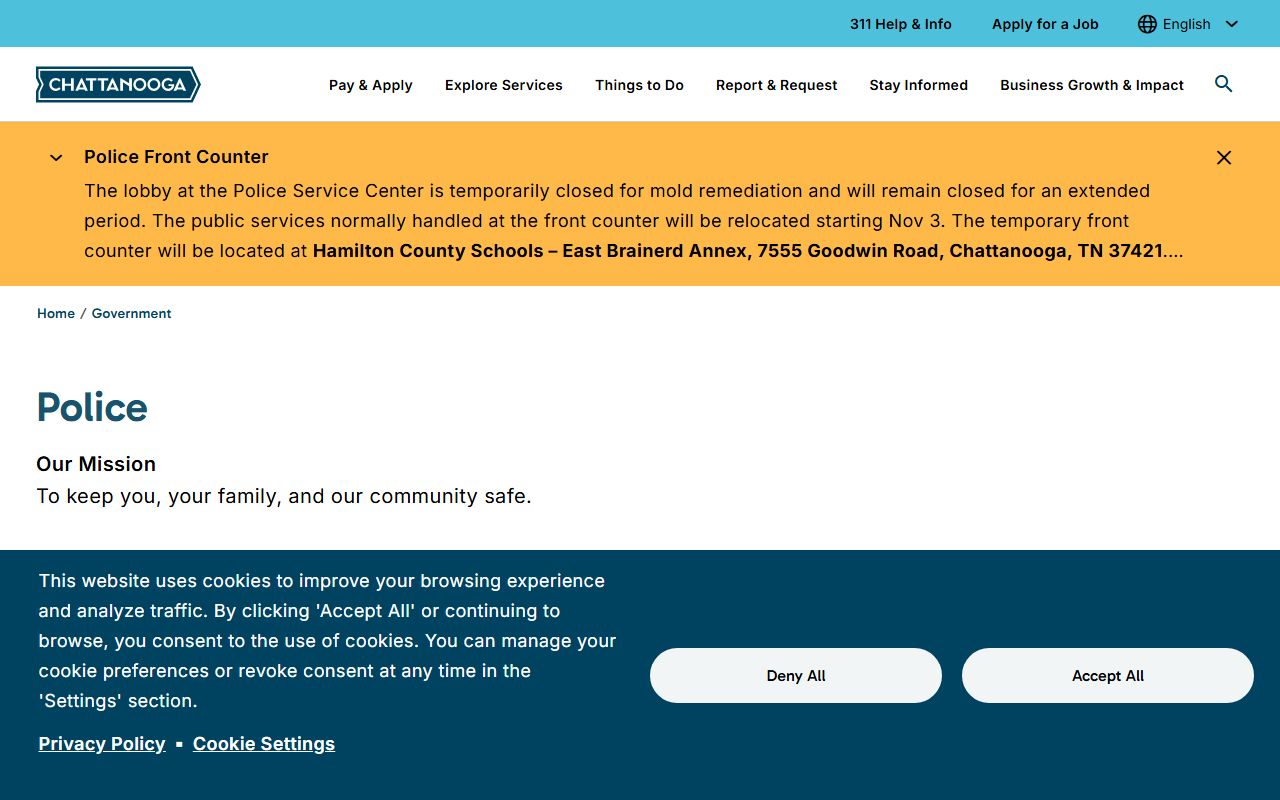
That page is the best first stop for Chattanooga Police Records because it points you toward the department, the services center, and the city record path.
When you only need a report status check, the city phone line is often enough. When you need the full file, use the records request route. When you need court or jail follow-up, move to Hamilton County or the Tennessee court system. Chattanooga Police Records are easiest to handle when the source stays clear from the start.
Where to Find Chattanooga Police Records
Chattanooga Police Records include incident and accident reports, police reports, and arrest records. The research says those records can be requested in person at the Police Services Center. It also says you need a valid photo ID and Tennessee residency. Fees vary by record type, so it helps to ask about the cost before the copy is prepared. A narrow request usually moves faster than a broad one.
The open records page linked here is the city request source used for the image below: Chattanooga open records request page.
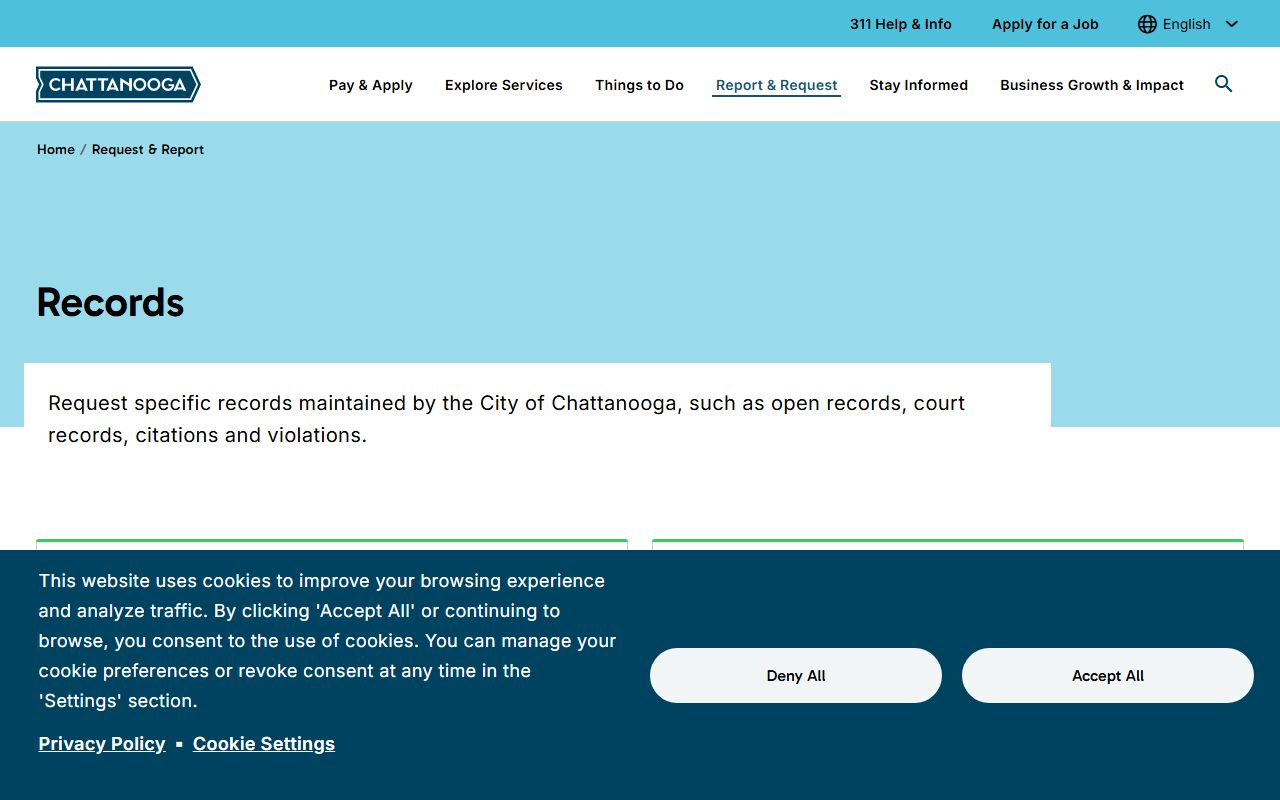
That request page matters because it shows the city path for Chattanooga Police Records and the office that handles open-records questions.
Use the city records desk when the report was made by Chattanooga officers. Use Hamilton County when the file turned into jail custody or booking data. Use the state tools when you need a broader history check, a crash copy, or a court confirmation that sits beyond the city page.
Chattanooga Police Department Records
Chattanooga Police Records can be more than a single PDF. They can include a narrative report, a crash page, a supplemental arrest sheet, or a record status note. The research names incident and accident reports, police reports, and arrest records as available record types. That means the request should match the file type you want. If you ask for a crash report, say crash report. If you need an arrest record, say that. If you need an incident report, keep it simple and direct.
Some Chattanooga Police Records may be limited if an investigation is active. Juvenile information is also restricted. Personal data can be redacted. That is normal under Tennessee access rules. It does not mean the whole file is closed. It means the department may release only the part of the record that the law allows. A focused request helps the records staff separate what is public from what must stay private.
When a record needs follow-up, keep the event date, street location, and involved names close at hand. Those details help the department find the right Chattanooga Police Records file faster and reduce back-and-forth with the records desk.
How to Request Chattanooga Police Records
The research says Chattanooga Police Records requests are made in person at the Police Services Center. It also says you can call the department to check report status. Start with the office address, photo ID, and a clear description of the file you need. If you know the incident date, include it. If you know the report number, include that too. If you only know the street or the person involved, that still helps.
Good requests usually include these details:
- Full name of the person or people involved
- Incident, arrest, or crash date
- Street, block, or neighborhood
- Report number if you have it
- Type of Chattanooga Police Records needed
If the city cannot release the full file right away, ask what part is available now. If the report moved into county custody, shift the request to Hamilton County. If the file is a crash report, use the Tennessee crash portal as a backup. Chattanooga Police Records search work is faster when the request is matched to the right office the first time.
Hamilton County Police Records and Jail
Hamilton County matters because some Chattanooga Police Records move into county custody after booking. The sheriff's office is at 600 Market Street in Chattanooga. The jail is the Hamilton County Jail and Silverdale Detention Center at 7609 Standifer Gap Road. The research says booking reports for the last 30 days are available online, and the jail search can be done by last name or SPN number. Updates are daily, and the county handles a large number of bookings each year.
Use the Hamilton County inmate information app when the Chattanooga case turned into a jail question. The county search path is here: Hamilton County inmate info app.
The county app helps with custody status, current booking details, and recent jail movement when Chattanooga Police Records no longer tell the whole story.
The sheriff's office also runs a booking app and a crime tip line. Those tools are useful when you need a recent booking trail or want to check whether a person moved through county custody after a city arrest. Chattanooga Police Records and Hamilton County records often work together, not as one file.
Public Access to Chattanooga Police Records
Tennessee public access rules control what you can inspect and copy. The main statute is T.C.A. 10-7-503. It says records are open during business hours unless another law makes them confidential. The research also points to a seven-business-day response rule under the Tennessee Public Records Act. That gives the department a deadline to produce the file, deny it with a reason, or give a timeline for more work.
The law is broad, but it has limits. Active investigations can be withheld. Juvenile records stay private. Sensitive personal data can be redacted. Expunged records are not public. If Chattanooga Police Records come back with blacked-out sections, that does not mean the request failed. It often means the department released the public part and protected the rest.
For a plain-language companion to the statute, the CTAS summary is useful: CTAS public records statutes summary. It helps explain how Tennessee records offices handle inspection, copying, and exemptions in practice.
Note: Chattanooga Police Records are usually open in part, but the exact release depends on the file type and whether another law protects the details.
Chattanooga Police Records and State Tools
State tools help when Chattanooga Police Records do not answer everything. The Tennessee Bureau of Investigation runs the main state criminal history repository and its TORIS portal. TORIS is useful for a name-based statewide criminal history search when you want more than one local police file. The TBI main site also explains background-check services and the public-facing record paths tied to state criminal history work.
For crash reports, the state purchase portal is the better route when the event was a traffic collision instead of a normal police call. The portal is here: Tennessee crash report portal. That source is often the fastest way to get a statewide crash copy when a Chattanooga officer or state trooper wrote the report.
If you need a broader police-records search across Tennessee, start with the TBI main site: TBI main website, then use the TORIS background check portal when the search needs a statewide criminal history result instead of one city file.
Those tools do not replace Chattanooga Police Records. They fill the gaps when the city record is only one piece of the case.
Chattanooga Police Records and Court Follow-Up
Arrest records often lead to court records. The Tennessee court system can help confirm case status after a Chattanooga arrest. The state court site is here: Tennessee Courts. That page helps when you need to see whether a case moved to filing, docketing, or another court step after the police side of the record was created.
Chattanooga Police Records and court records are different. The police report explains what officers saw and did. The court file explains what happened after that. The county jail record fills in custody, bond, and booking details. Put those parts together and the case line gets much clearer. That is the practical way to search Chattanooga Police Records without mixing up city, county, and state sources.
Use the court side when the police file no longer tells you what happened next. Use the city side when you need the report itself. Use Hamilton County when the person was booked or held in county custody. The right sequence saves time and keeps Chattanooga Police Records requests focused.
More Chattanooga Records
Some searches need one more local step. Hamilton County records can fill in booking details, while Tennessee court and state tools can confirm what happened after the police report was created. If you still need the city page, go back to Chattanooga Police Records and start with the department source.
When a file is split across offices, the cleanest search path is city first, county next, and state last. That sequence keeps Chattanooga Police Records manageable and helps you avoid duplicates or missing pieces.